Slotted & Castle Nuts
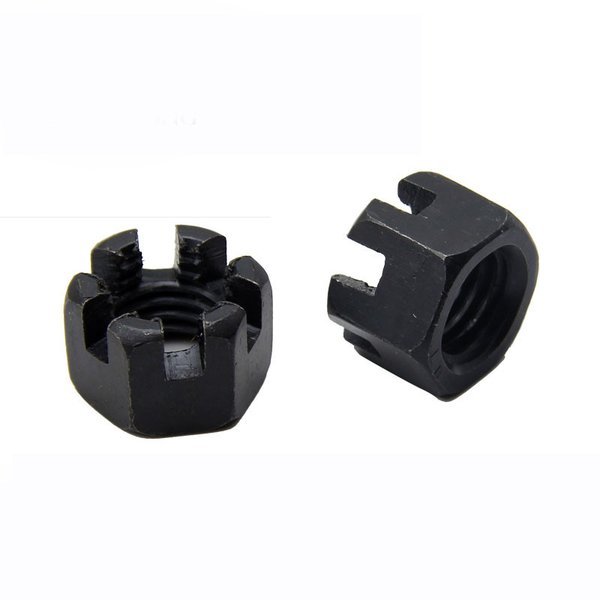
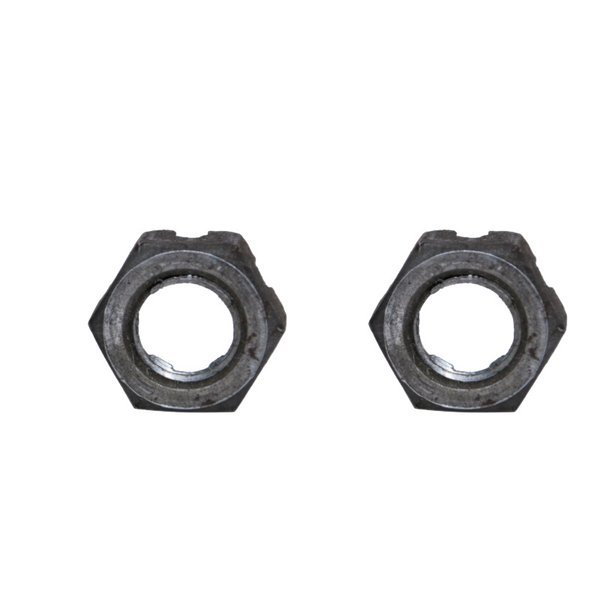
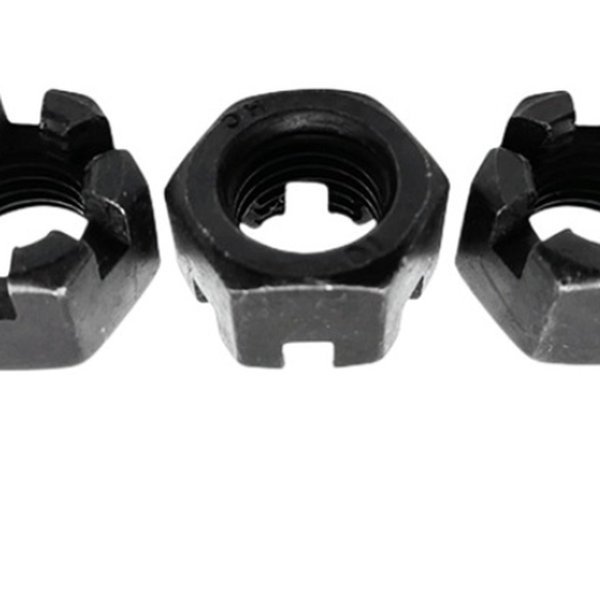
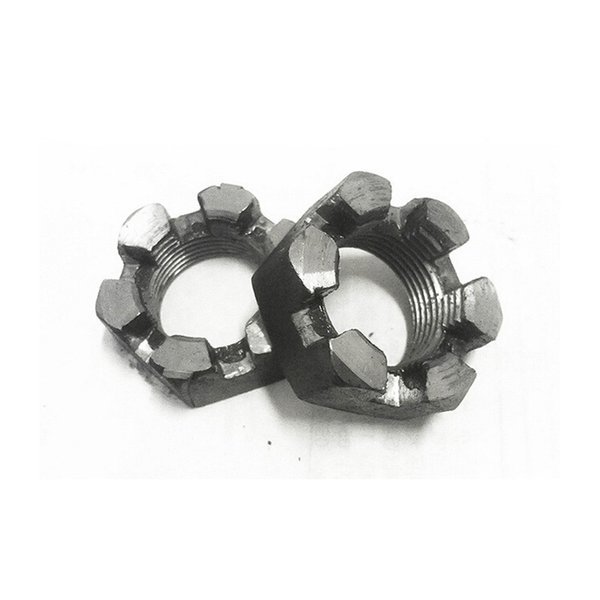
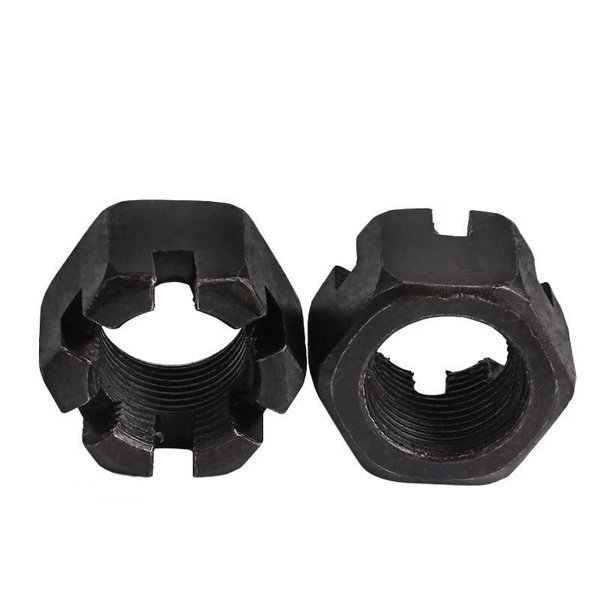
A castle nut is a hexagon nut with six radial slots cut across the top face. Paired with a split (cotter) pin through a cross-drilled bolt, the slots form a positive mechanical lock: the nut cannot rotate loose even under heavy vibration, and the connection can be undone and re-made indefinitely. This is the locking method of choice on axles, steering linkages and trailer couplings — anywhere a friction-only lock nut is not trusted.
Technical Specifications
| Parameter | Specification |
|---|---|
| Standard | DIN 935 (castle nut) / DIN 937 (thin slotted nut) |
| Type | Hex slotted nut, six radial slots |
| Size Range | M6 – M42 |
| Material | Carbon steel; stainless steel A2/A4 on request |
| Surface Finish | Black oxide; zinc plated / hot dip galvanized on request |
| Grade | Class 6 / Class 8 (confirm per drawing) |
| Locking Method | Split pin through slots + cross-drilled bolt hole |
| MOQ | 500 pcs (standard), 2,000 pcs (custom) |
| Lead Time | 7-15 days (standard), 20-30 days (custom) |
| Packaging | Bulk cartons / Wooden pallets / Custom labeling |
Available Sizes
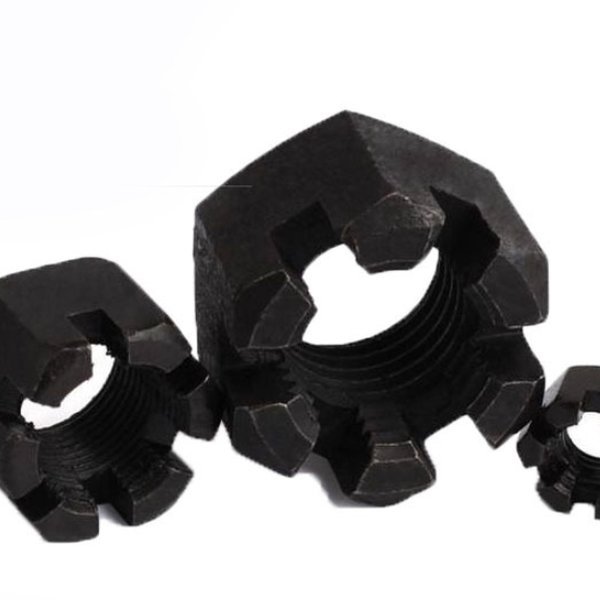
M6, M8, M10, M12, M14, M16, M18, M20, M24, M30, M36, M42
How the Castle Lock Works
After the nut is tightened, it is turned further to the nearest slot position and the split pin is passed through the bolt’s cross hole and the slots. The pin physically blocks rotation, so the lock does not depend on friction, thread condition or temperature — and it survives repeated assembly cycles as long as a fresh pin is fitted each time. The trade-off is preparation: the bolt needs a cross-drilled hole, and a plain washer is used under the nut.
Applications
- Automotive axles and wheel bearing adjustments
- Steering linkages and tie rod ends
- Trailer couplings and towing hitches
- Agricultural and construction machinery pivots
- Clevis joints and control linkages
- Any assembly requiring a re-usable positive lock
Castle Nut vs Nyloc Lock Nut
A nylon insert lock nut locks by friction and needs no drilled bolt, but the insert limits service temperature and the nut has a finite re-use life. A castle nut locks mechanically: it tolerates high temperatures, is effectively unlimited in re-use, and gives a visible confirmation that the nut is pinned. Choose the castle where the joint is safety-critical or runs hot; choose the Nyloc where speed of assembly matters and the bolt is not drilled. For the friction alternative see our lock nut range.
Certifications
ISO 9001:2015 certified. Material certificates (EN 10204 3.1/3.2). RoHS and REACH compliant.
Frequently Asked Questions
Does the split pin come with the nut?
Split pins are supplied separately or fitted on request — confirm with your inquiry whether you need the pins included in the shipment.
Can a castle nut be reused?
Yes — unlike friction lock nuts, a castle nut can be removed and refitted many times. Fit a new split pin at each reassembly; reusing a fatigued pin defeats the lock.
What is the difference between DIN 935 and DIN 937?
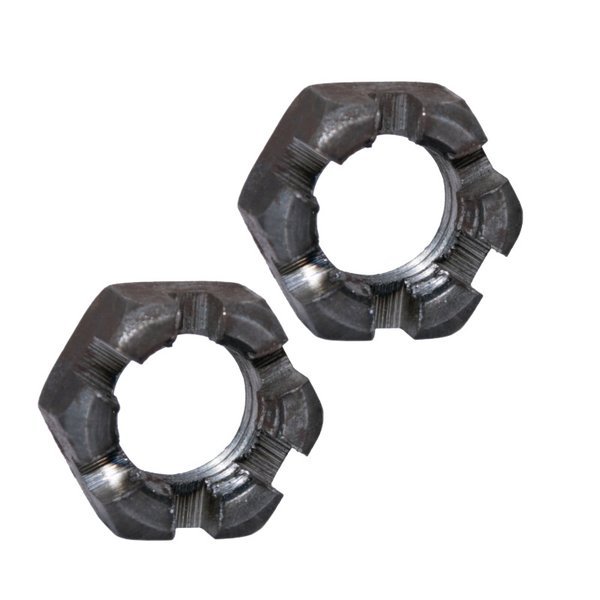
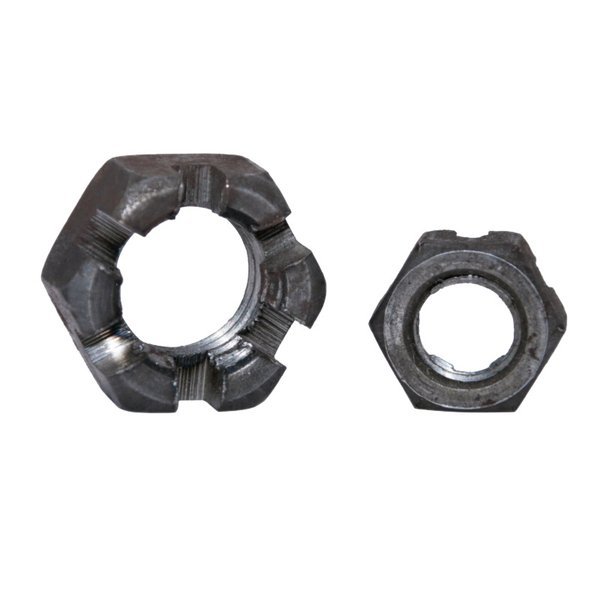
Both are slotted hex nuts. DIN 935 is the full-height castle pattern used with split pins; DIN 937 is the thin (jam) slotted pattern where height is limited. Confirm the height your drawing requires before ordering.
What is the MOQ and lead time?
The MOQ is 500 pcs (standard), 2,000 pcs (custom). Lead time is 7-15 days (standard), 20-30 days (custom). Mixed-size containers and larger orders are negotiable — send us your requirement for a quick quote.