
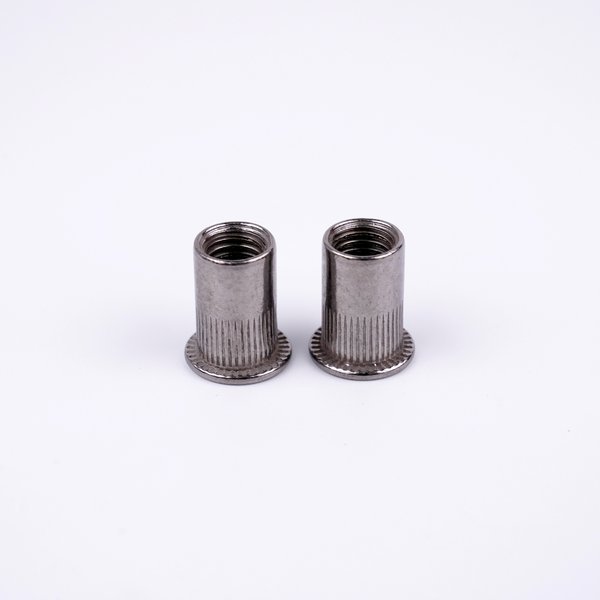
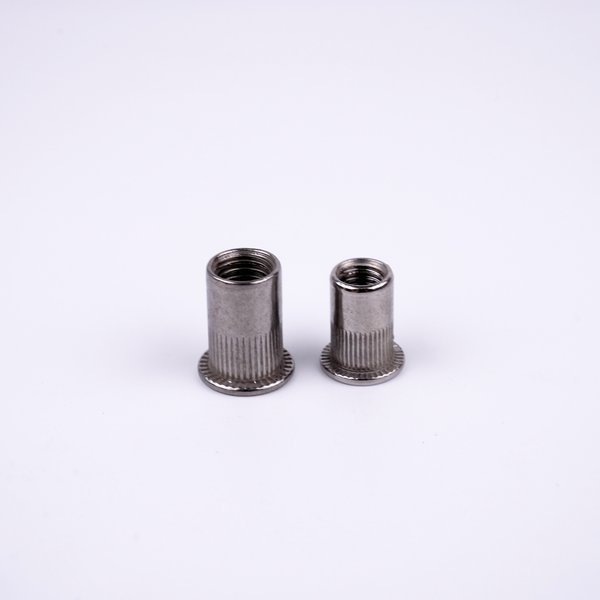
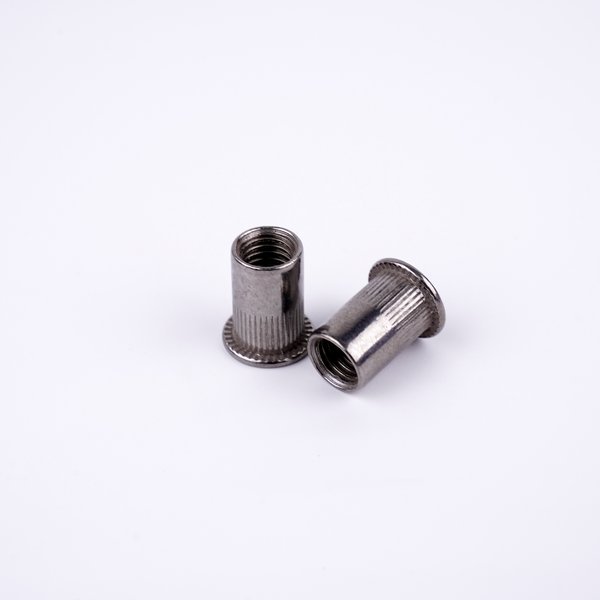
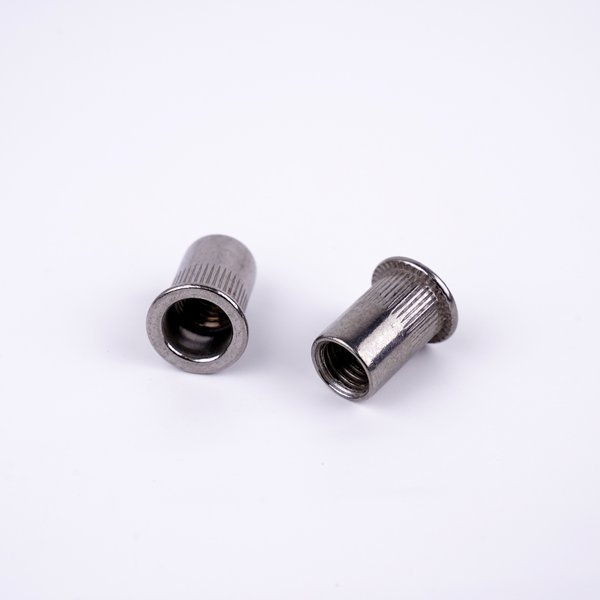
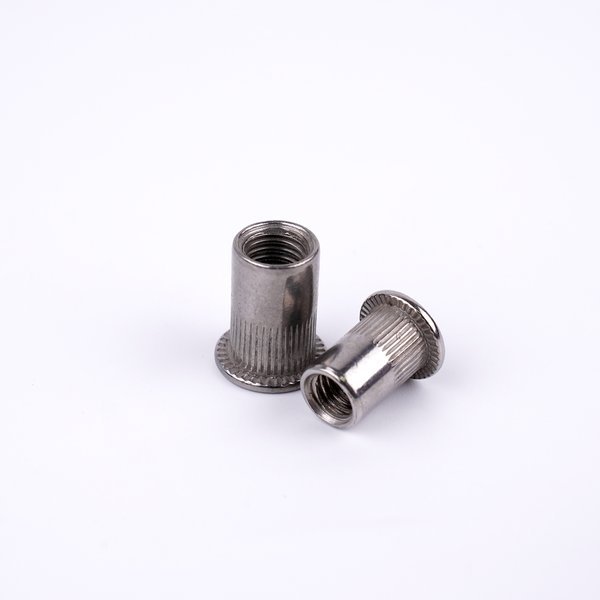
Flat Head Rivet Nuts – 304 Stainless Steel (Blind Rivet Nuts)
Our 304 stainless steel flat head rivet nuts (blind rivet nuts) are installed with a hand or pneumatic rivet nut tool to create a permanent, load-bearing thread in thin sheet metal, tube and profiles that are too thin to tap. The knurled body resists rotation, and the flat head sits flush on the workpiece surface.
Technical Specifications
| Parameter | Specification |
|---|---|
| Type | Flat Head Rivet Nut (Blind Rivet Nut) |
| Thread | M3 – M12 (Metric Coarse) |
| Head Style | Flat head (large flange); countersunk available |
| Body | Knurled (anti-rotation), round body |
| Material | 304 (A2) Stainless Steel |
| Grip Range | Depends on body length — specify sheet thickness when ordering |
| Installation | Hand or pneumatic rivet nut tool, single side |
| MOQ | 5,000 pcs (standard), 10,000 pcs (small sizes) |
| Lead Time | 5-10 days (standard), 15-20 days (custom) |
| Packaging | Bulk in cartons / Plastic bags / Custom labeling |
Applications
- Automotive body panels and trim
- Electrical enclosures and control cabinets
- Appliances and consumer products
- HVAC ducting and tubing
- Sheet-metal fabrication and extrusions
Certifications
ISO 9001:2015 certified manufacturing. Material test certificates (MTC) per EN 10204 3.1 available on request. RoHS and REACH compliant.
Frequently Asked Questions
What is a rivet nut and when do I need one?
A rivet nut (blind rivet nut) installs from one side of the workpiece and leaves a permanent internal thread. Use it when the material is too thin to tap — thin sheet, tube or profiles — or when the back side of the joint is not accessible.
How is a flat head rivet nut installed?
Screw the nut onto the mandrel of a rivet nut tool, insert it into the pre-drilled hole, and pull the mandrel. The body collapses on the blind side, clamping the sheet between the bulge and the flat head. The tool is then unspun, leaving a ready-to-use thread.
How do I choose the right grip range?
The grip range is the total thickness of material the rivet nut will clamp. Measure your sheet or stack thickness and select a body length whose grip range covers it. If in doubt, tell us your sheet thickness and we will select the correct length.
Do you provide material certificates?
Yes. Material test certificates per EN 10204 3.1 are available on request, and our manufacturing is ISO 9001:2015 certified. RoHS and REACH compliance documentation can also be provided.