
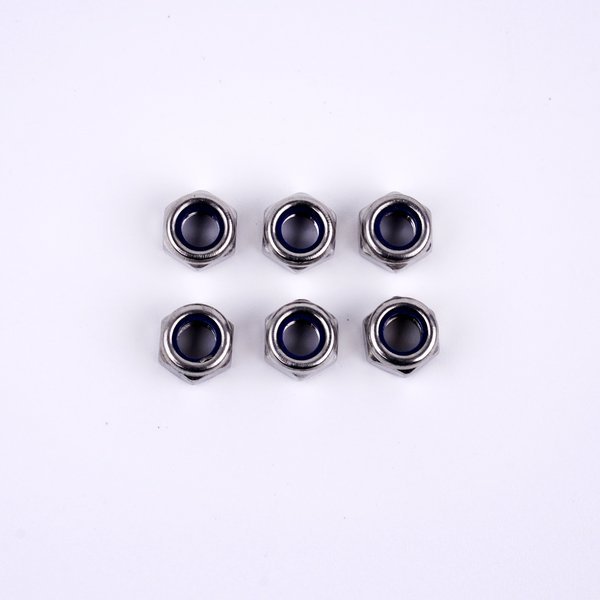
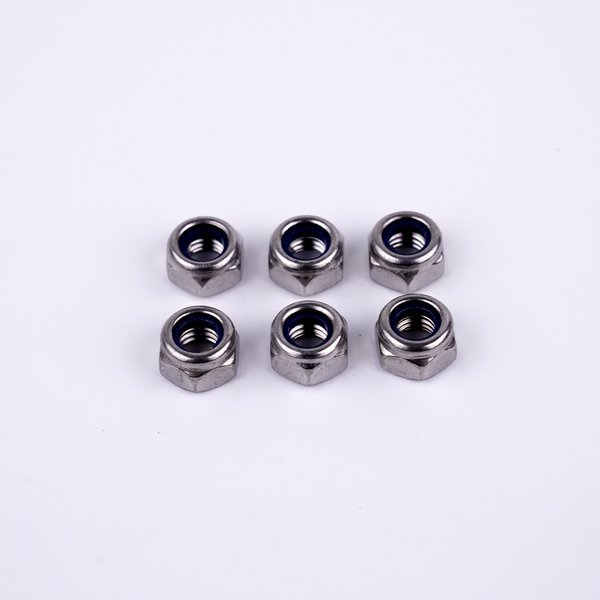
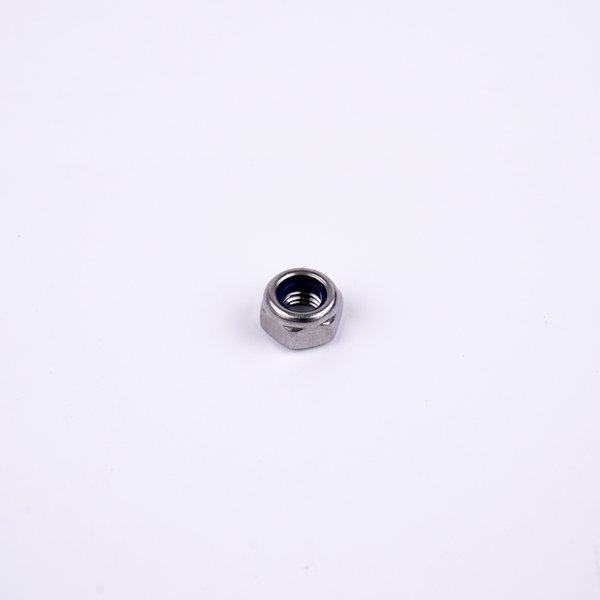
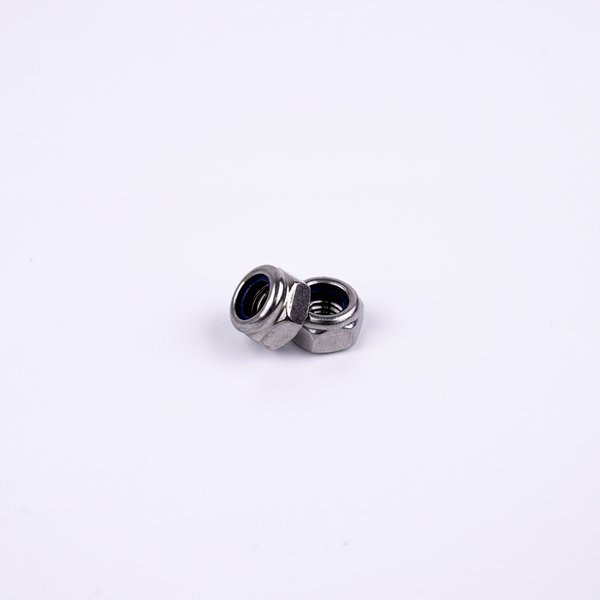
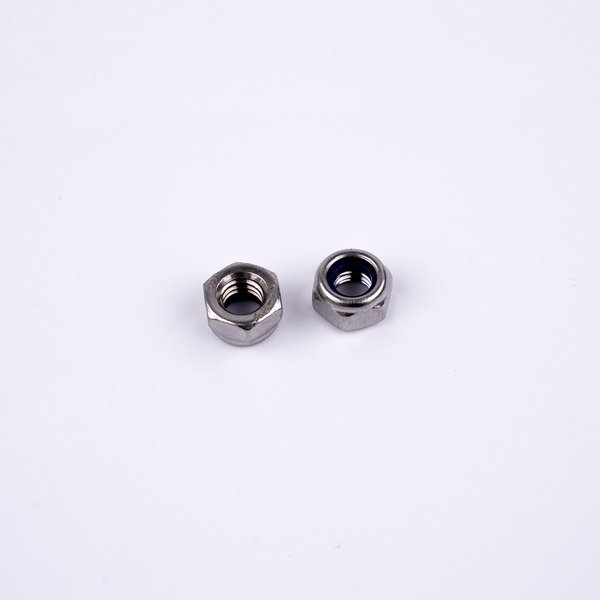
Nylon Insert Lock Nuts (DIN 985) – 304 (A2-70) Stainless Steel
Our 304 (A2-70) stainless steel nylon insert lock nuts, manufactured to DIN 985, feature a captive nylon collar that grips the bolt thread to resist loosening from vibration and shock. The all-metal thread carries the load while the nylon insert provides the prevailing torque — and the nut can be reused several times.
Technical Specifications
| Parameter | Specification |
|---|---|
| Standard | DIN 985 / ISO 10511 |
| Nut Type | Nylon Insert Lock Nut (prevailing torque) |
| Thread | M3 – M24 (Metric Coarse, Right Hand) |
| Material | A2-70 (304) Stainless Steel |
| Nylon Insert | PA6 (polyamide) captive collar |
| Surface Finish | Passivated |
| Reusability | Reusable several times |
| MOQ | 5,000 pcs (M3–M12), 1,000 pcs (M14+) |
| Lead Time | 5-12 days (standard), 15-25 days (custom) |
| Packaging | Bulk in cartons / Plastic bags / Custom labeling |
Applications
- Machinery subject to vibration and shock
- Automotive and transportation equipment
- Outdoor structures and street furniture
- Pumps, fans and rotating equipment
- Any bolted joint where accidental loosening must be prevented
Certifications
ISO 9001:2015 certified manufacturing. Material test certificates (MTC) per EN 10204 3.1 available on request. RoHS and REACH compliant.
Frequently Asked Questions
How does a nylon insert lock nut work?
The nut contains a captive nylon (PA6) collar with a slightly smaller internal diameter than the bolt thread. As the bolt passes through, the nylon grips the thread flanks, creating friction (prevailing torque) that resists rotation and loosening from vibration.
Can nylon insert lock nuts be reused?
Yes — unlike distorted-thread lock nuts, the nylon collar retains much of its gripping force after removal, so DIN 985 nuts can typically be reused several times. For critical joints we recommend using a new nut on final assembly.
What temperature can the nylon insert withstand?
The PA6 nylon collar is generally suitable for continuous service temperatures up to about +120°C. For higher-temperature joints, consider an all-metal lock nut instead.
Do you provide material certificates?
Yes. Material test certificates per EN 10204 3.1 are available on request, and our manufacturing is ISO 9001:2015 certified. RoHS and REACH compliance documentation can also be provided.